

Blog
Categories
Tags
Recent Posts
- All
- Health & Fitness
- Physiotherapy & Sports Massage


- June 24, 2026
- Author :lavanya nambiar
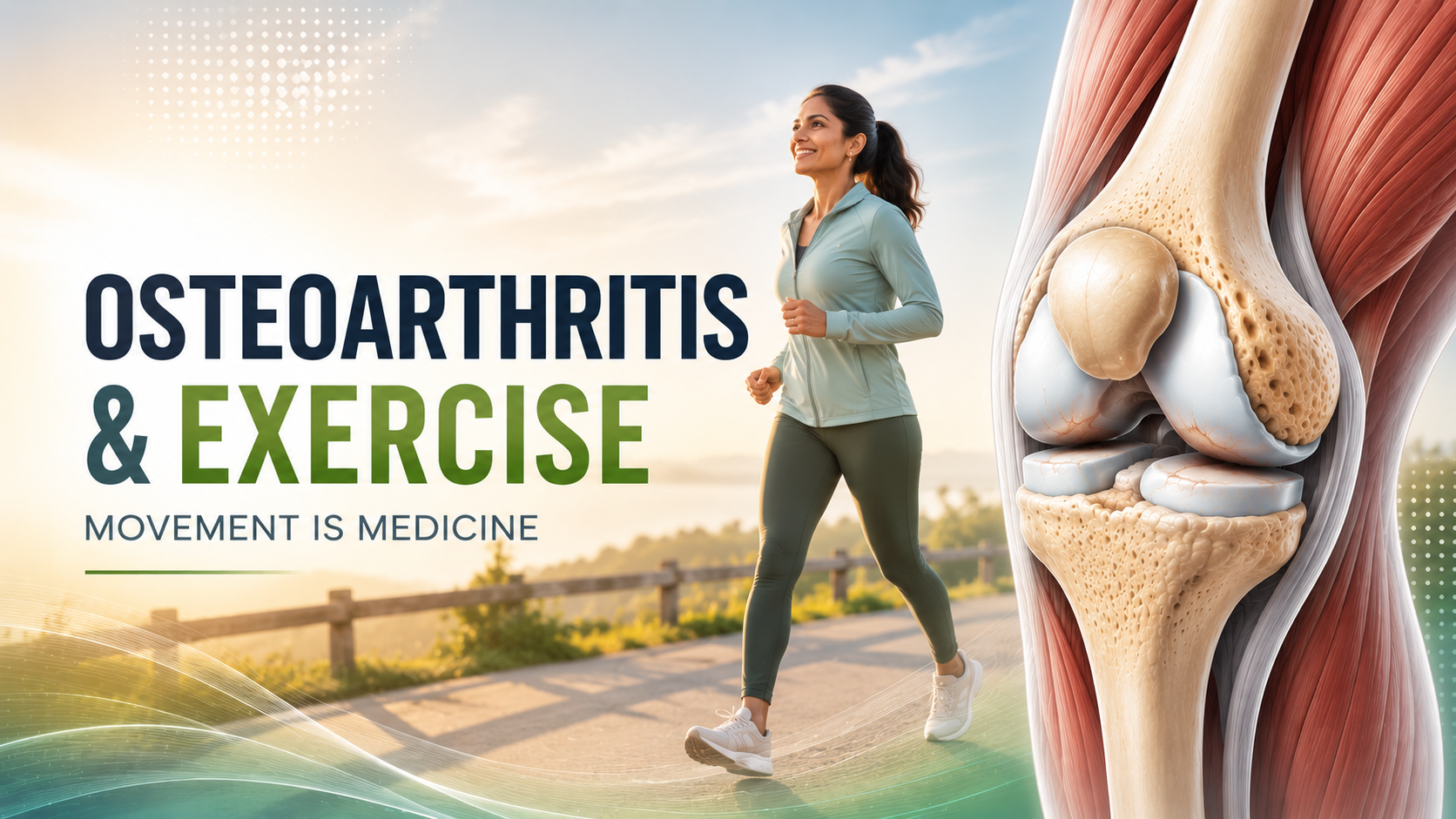
Osteoarthritis & Exercise: Movement is Medicine
Osteoarthritis (OA) is the most common joint disorder and one of the leading causes of pain and disability worldwide. It occurs when the cartilage that cushions the ends of bones gradually wears down, leading to pain, stiffness, swelling, and reduced mobility. While OA can affect the hips, hands, spine, and shoulders, the knee is the most commonly affected joint.
The burden of OA is increasing rapidly, especially in India, where life expectancy is rising and the elderly population continues to grow. OA affects more than physical health—it can reduce independence, impact mental well-being, create financial challenges, and place additional pressure on families and healthcare systems. Women are more commonly affected than men, particularly after menopause. Hormonal changes, joint structure differences, wider pelvic alignment, and obesity are some of the reasons for this increased risk.
One of the most important contributors to OA is muscle weakness. Healthy muscles help stabilize joints, absorb shock, and distribute forces during movement. When muscles become weak due to aging, injury, inactivity, or poor fitness, joints experience greater stress. Research has shown that weakness of the quadriceps muscles around the knee is strongly linked to the development and progression of OA knee. Age-related muscle loss, known as sarcopenia, further reduces joint control and increases the risk of pain and disability.
The good news is that exercise is one of the most effective strategies for preventing and managing OA. Contrary to popular belief, regular exercise does not damage healthy joints. Instead, it strengthens muscles, improves joint stability, reduces pain, enhances mobility, and supports overall health. Studies show that strengthening exercises, walking, cycling, swimming, Tai Chi, and other low-impact activities can significantly improve symptoms and quality of life.
Both land-based and aquatic exercise programs can be beneficial. Walking and strengthening exercises often provide long-term benefits, while water-based activities may be ideal for people with severe pain or excess body weight. The key is consistency, as the benefits of exercise are maintained only through regular participation.
Although OA cannot currently be cured, staying active can slow its progression and help people maintain independence. Maintaining muscle strength, managing body weight, and following a structured exercise routine are powerful tools for protecting joint health. The message is simple: movement is medicine, resting is resting. Investing in regular physical activity today can lead to healthier joints, less pain, and a better quality of life tomorrow.

We believe that exercise isn’t just about how it makes you look, but also how it makes you feel. Get fit today.
Contacts
B1&B2, Ground floor, Aswathi Apartments, No:4, 2nd Cres Park Rd, Gandhi Nagar, Adyar, Chennai, Tamil Nadu 600020
Whatsapp Number: 98419 11267
Every day: 6:00 am – 20:00 pm
Saturday: 6:00 am – 15:00 pm
Sunday: Closed
Read Our Blog
Never miss a moment of updates with this collection of our newest trends and tips in fitness industry.
Copyright © 2026 Futureselfperformanceinstitute